What to wear ice fishing in Rovaniemi at −25 °C
All three ice fishing trips from Rovaniemi hand you a thick winter outfit before you leave, so nobody needs to buy a parka for one morning on a lake. What goes underneath is your job. The right base layers and socks decide whether you enjoy the third hour on the ice or count the minutes to the bus.
How cold a Rovaniemi winter gets
January in Rovaniemi averages about −13 °C (9 °F). That figure hides a wide spread, since mild grey days near freezing alternate with clear, still spells that drop far lower.
Cold snaps of −30 °C (−22 °F) or below come most winters. On those days the air stings the inside of your nose, and a bare hand goes numb in a minute or two.
Planning around the coldest case is the safe approach. Our guide to short days and hard frost covers what that kind of cold does to people and their phones.
What the operators lend you
Every trip on this site includes outer winter wear, which saves a lot of packing. Safartica lists winter clothing on its snowmobile day, and Wild About Lapland lists professional winter clothing and boots.
Arctic Circle Snowmobile Park includes winter clothes on its combo. The same company's ice fishing trip by car lists overalls and boots plus gloves, which gives a fair idea of the kit.
Expect a one-piece overall with heavy boots and big mittens or gloves. Arrive early enough to try things on, since Safartica asks you to be at its office 25 minutes before the start for exactly this.
The layers that go underneath
An overall blocks wind and snow, but it does not create warmth. That comes from the air trapped in the layers under it. Two or three thinner pieces beat one bulky sweater.
- A thermal base layer (top and bottom) in merino wool or a synthetic fabric
- A warm mid layer such as a fleece or a thin down vest
- Comfortable trousers that are not tight under the overall
- Wool socks (one thick pair or a thin pair under a thicker one)
Jeans are the usual mistake. They are cold once they are damp, and they bunch up inside the overall when you sit on a stool for an hour.
Leave all cotton at the hotel, from T-shirts to underwear. Sweat from the walk or the snowmobile ride stays in cotton, and damp fabric pulls heat out of you while you wait by the hole.
Hands and feet, then the face
Hands get cold first on an ice fishing trip, because you need your fingers to work the line. Bring thin liner gloves to wear under the mittens, then slip the mittens back on between bites.
Feet suffer next, mostly from standing still. Lace the borrowed boots firmly but not tight, since a squeezed foot loses circulation. A spare pair of socks in a pocket helps if yours get damp.
Your own hat and neck warmer matter more than people expect. A fleece balaclava or a buff pulled over the nose protects the cheeks, where frostbite often shows up first as small white patches.
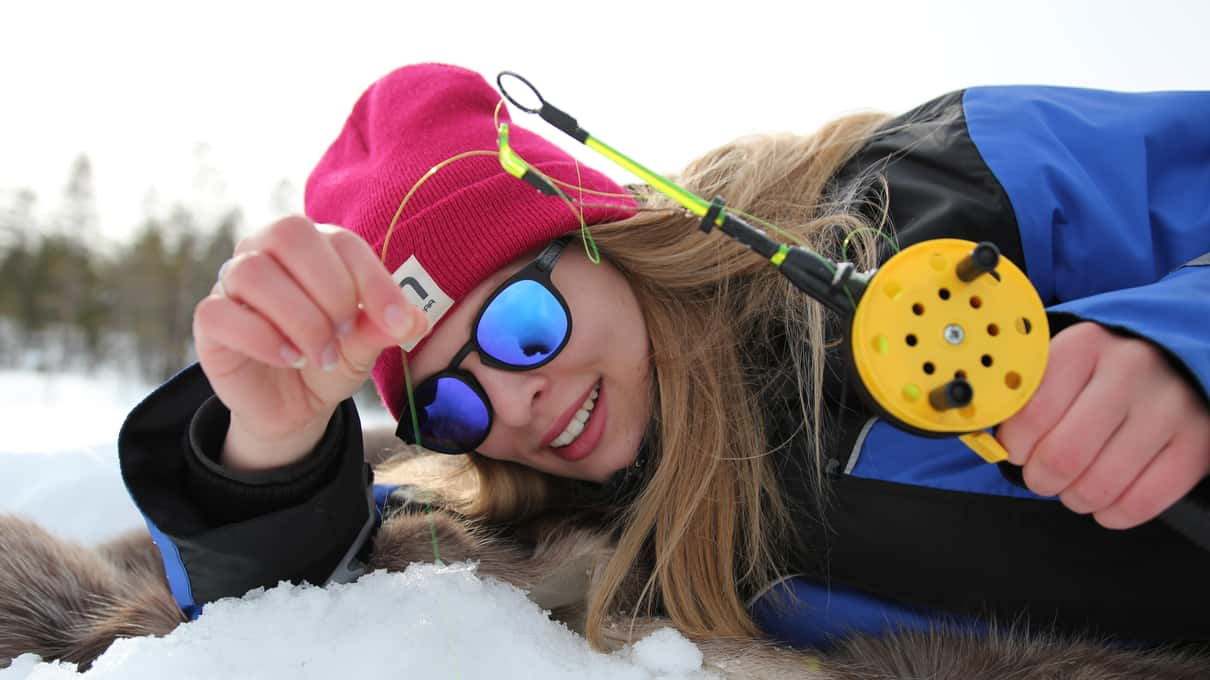
Riding a snowmobile versus sitting by a hole
On the two snowmobile days, wind chill is the big factor. Moving at speed through −20 °C (−4 °F) air feels much colder than the thermometer says, and the face takes most of it.
Passengers get colder than drivers, since they have nothing to do with their hands. Swap places when the guide stops, and tell them early if your fingers lose feeling. Our page on snowmobile or on foot compares the two kinds of trip.
The fishing part is cold in a different way. You sit or kneel for long stretches with little movement, and the ice draws heat through boots and knees. Standing up and walking a few steps every so often keeps the blood moving.
A full day out, with soup at the fire
Safartica's trip pairs two to three hours of snowmobile driving with ice fishing and a hot soup lunch cooked at a campfire. Winter clothing and transfers are part of the price.
The walk-in trip and the short combo
On Wild About Lapland's walk-in trip from ~$99, you reach the lake on foot after a 5–10 minute walk through old forest. That warms you up, so open the overall a little on the way and close it before you sit down.
Arctic Circle Snowmobile Park's combo from ~$181 covers about 20 km (12 miles) by snowmobile and then fishes by a bonfire. Shorter riding means less wind, but the same layers apply.
Families should dress children a layer warmer than adults. Kids on both snowmobile days ride in a sled behind the guide, which is cold work for small bodies, and our guide to ice fishing with kids has more on that.
Phones and other small things
Cold drains batteries quickly, and a phone can switch itself off at 40 percent. Keep it in an inside pocket close to your body, and bring it out only for the photo.
A small power bank in the same warm pocket helps on a long day. Touchscreen gloves work poorly at these temperatures, so plan to take one liner glove off for a few seconds instead.
Sunglasses earn their place on bright days from February on, when sun on snow is harsh. Lip balm stops cracked lips, and a tissue in a reachable pocket saves a lot of sniffing.
A short packing list
Most of this fits in the pockets of what you already wear on the way to the office. A small backpack is fine on the walk-in trip, but snowmobile riders do better with nothing on their backs.
- Merino or synthetic base layer (top and bottom)
- Fleece or thin down mid layer
- Wool socks plus a spare pair
- Warm hat and a neck warmer or balaclava
- Thin liner gloves for handling the line
- Phone in an inside pocket, power bank, lip balm
Check what each trip includes in our price comparison of the three tours, and see what the hours on the lake look like in three hours on the ice.