Ice fishing in Lapland's midwinter twilight
Midwinter in Rovaniemi means short days with long blue twilight, and the deepest cold of the year. None of that stops the ice fishing trips, which run in the frost and the half light. Knowing what to expect makes the day easier and helps you choose when to go.
How much light Rovaniemi gets around the solstice
Rovaniemi sits just south of the Arctic Circle. Around the winter solstice the sun clears the horizon for only about two hours, and it stays low in the south the whole time.
The day feels longer than that. A soft blue twilight spreads for a few hours on each side of the short sunrise, and with snow on the ground it is bright enough to walk and fish without a torch.
Because the town lies below the circle, it has no true polar night. Places further north in Finnish Lapland lose the sun completely for a while, but Rovaniemi keeps a brief sunrise every day.
Daylight returns fast after January
From late January the days stretch quickly, gaining several minutes each day. By late February there is a full working day of light, and by March the sun is high enough to feel warm on your face.
Christmas and New Year fall in the darkest stretch, and they are also the busiest weeks in Rovaniemi. Booking well ahead makes sense if you want a particular trip on a particular day.
That change shapes the trips more than any calendar label. Our guide to the best months for ice fishing walks through how the ice season shifts from dark midwinter to bright late winter.
What deep cold does on a frozen lake
The coldest spells usually come in the dark months, when clear skies let the heat escape overnight. Temperatures around −25 °C (−13 °F) are common enough, and colder snaps happen most winters.
The first risk is to skin. Frostbite tends to start on the cheeks and nose or on the fingertips, showing as pale, waxy patches that feel numb. Guides watch for it, and you can check each other's faces during the breaks.
Breathing is the next thing you notice. Very cold air can catch in the throat on the first few breaths, and a neck warmer pulled over the mouth takes the edge off it.
Fish slow down as well. Bites in deep cold can be rare, and the holes start to skin over with fresh ice within minutes. A guide will clear them with a scoop, so the waiting goes on.
Batteries are the other casualty. Phones and headlamps lose charge far faster in the frost, so carry them close to your body and bring a spare power source on a long day.
Who decides when it is too cold
The tours do not stop for ordinary winter weather. Wild About Lapland states that its trip runs in all weather. Snow and wind are part of the normal season for every operator here, as is darkness.
Extreme cold is another matter, and the operator decides. None of the listings names a cut-off temperature, so ask the company directly if a severe cold spell is forecast for your date.
All three trips allow free cancellation up to 24 hours before the start, which helps if the forecast turns harsh. Reserve now and pay later is offered on GetYourGuide too.
A shorter day when the frost bites
Arctic Circle Snowmobile Park's combo lasts about 4.5 hours, with hotel pickup in Rovaniemi centre and sausages by a bonfire on the lake. It suits a midwinter visit when a full day outside feels like too much.
Picking a trip for the darkest weeks
Length is the main lever. Wild About Lapland's walk-in trip from ~$99 runs about 3–4 hours with a short forest walk, so you spend less time exposed and no time in the wind on a machine.
Arctic Circle Snowmobile Park's trip from ~$181 adds about 20 km (12 miles) of snowmobile riding, rated 4.6 from 200+ reviews on GetYourGuide. The fire and the hot drinks make the waiting easier in the frost.
Safartica's day from ~$211 is the longest at 5–6 hours, with a hot soup lunch at the campfire. In the deepest cold that warm meal counts for a lot, but you are outdoors for most of the day.
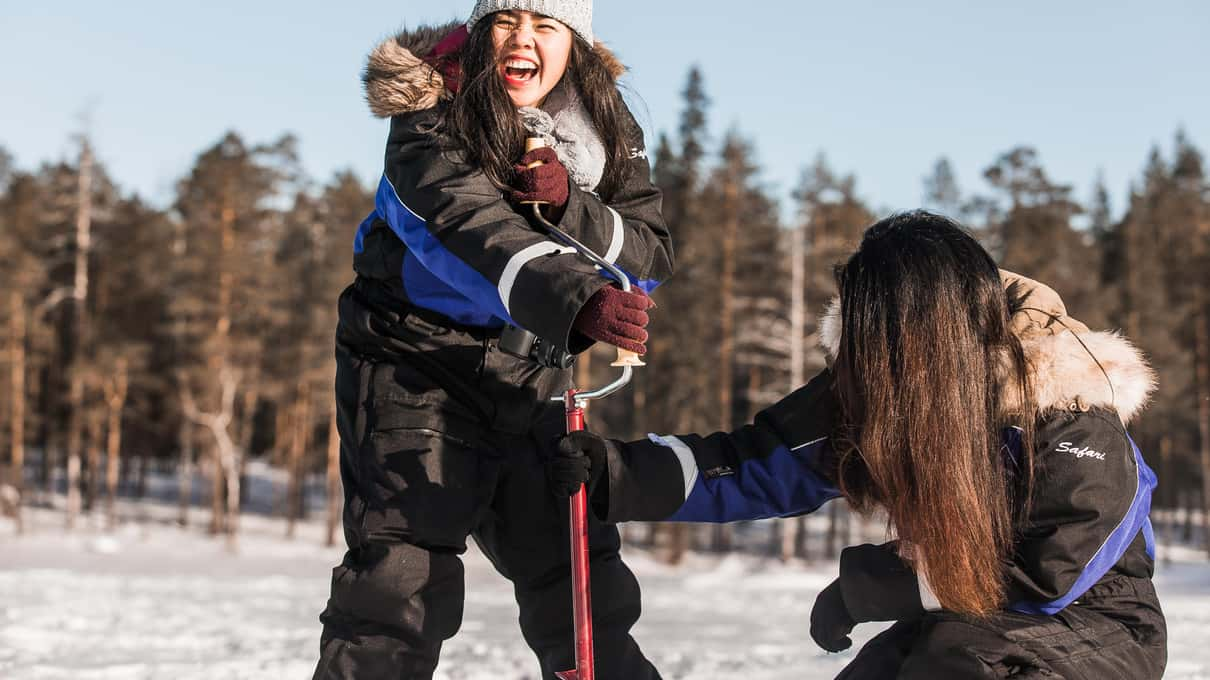
Blue twilight and the aurora
Midwinter has its own look. The low sun and long twilight turn the snow pink and violet for hours, and the light around noon can feel like a long sunset.
The dark evenings also give the best chance of seeing the aurora, which needs a dark, clear sky. None of the ice fishing trips promises it, and an evening attempt is a separate plan, which our guide to a three-day stay covers.
Getting ready for the cold months
The operators lend overalls and boots, so preparation is mostly about what you wear underneath. Our page on what to wear at −25 °C lists which layers work best under them.
None of the listings gives a start time, so check the slots when you book. In the darkest weeks a trip that spans the middle of the day catches the short sunrise and the best of the twilight on the lake.
Eat a proper breakfast, since the body burns more to stay warm, and drink water even if you do not feel thirsty. Tell the guide early if anyone in the group starts shivering hard or goes quiet.
If cold and dark sound like the wrong mix for your group, late winter brings the same frozen lakes with more light. Read how the guides judge the ice before going, whichever weeks you pick.